

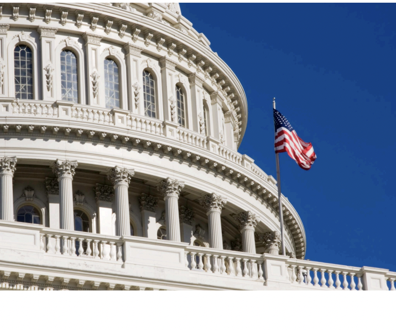
House Oversight and Reform Committee Chairman James Comer, R-Ky., argued that extensive use of settlements could serve to mask systemic issues of favoritism or other management malfeasance in cases where employees’ appeals were justified. Graeme Sloan/Getty Images



House GOP probes agency settlements with federal workers
Republican members of the House Oversight and Reform Committee argued agencies should settle less often with feds who allege prohibited personnel practices, but experts say the government acts similarly to private sector litigants.

Republicans on the House Oversight and Reform Committee on Monday announced they would investigate the rate at which federal agencies settle cases involving allegations of prohibited personnel practices, implying they go easy on poor performing or misbehaving federal workers.
In a letter to Office of Personnel Management Director Scott Kupor, Committee Chairman James Comer, R-Ky., requested data on federal employment cases heard before the Equal Employment Opportunity Commission, which investigates allegations of workplace discrimination, the Federal Labor Relations Authority, which oversees union issues, the Office of Special Counsel, which investigates whistleblower retaliation and Hatch Act allegations, and the Merit Systems Protection Board.
Comer argued that agencies’ success in defending employment actions before the MSPB is incongruous with their high acceptance of settlement agreements and suggested payouts stemming from those settlements are a waste of taxpayer money.
“In adverse action cases that are not dismissed at the MSPB, agencies opt to settle 68% of the time,” Comer wrote. “Among cases that proceed to decision, more than 80% of agency adverse action decisions are upheld, suggesting that agencies are frequently and inexplicably settling cases with taxpayer dollars that they would otherwise win. This raises the question of whether cases are being settled despite a high likelihood of government success on the merits, and, if so, whether systemic incentives are driving outcomes that prioritize short-term expediency over long-term accountability and savings for taxpayers.”
But Michael Fallings, managing partner at federal employment law firm Tully Rinckey, PLLC, said agency attorneys conduct the same analysis as private sector employers—and litigants in other court settings—when determining whether to settle a case.
“People and agencies settle for a multitude of reasons, but mainly: each side wants to prevent liability,” he said. “The government wants to avoid losing and having to perhaps pay even more money [than they would have under a settlement], and in each case it does an analysis of whether there is liability. And it’s the same for the employee: they don’t want to lose the case and be left with nothing. It’s a risk assessment, and it’s not just used in employment law.”
And if agencies were to abandon settlements and take every adverse action appeal before the MSPB or other adjudicatory body, the cost to taxpayers would increase, not decrease, he said.
“If there was an executive order or what-not preventing settlements of any MSPB appeals or similar cases, you’d see a much bigger expense utilized by the federal government in defending these claims,” Fallings said. “You’d have to pay to pull people out of their normal jobs to go to hearings, you’d have to produce all kinds of documents in a discovery process, and you have to pay the attorneys representing the agency. You’d easily expend as much, if not more, by trying to prevent a settlement from happening.”
Comer also argued that extensive use of settlements could serve to mask systemic issues of favoritism or other management malfeasance in cases where employees’ appeals were justified.
“While settlement may promote administrative efficiency, excessive reliance on it carries real costs: it forecloses the development of beneficial legal precedent, masks patterns of prohibited personnel practices, and allows agencies to manage recurring legal liability without addressing the underlying misconduct,” he wrote. “Congress cannot exercise meaningful oversight of the federal workforce when a supermajority of disputes are resolved through opaque, non-public agreements.”
But Fallings said that doesn’t reflect the reality of settlement talks, which still usually require the agency rectify any underlying misbehavior.
“Settlements don’t just involve money,” he said. “If the claim or appeal involves a prohibited personnel practice, that mostly likely will be discussed and be resolved as part of the settlement. A settlement can’t make everything go away, but in my experience, if an agency’s counsel is aware of a PPP happening, they are taking action to remedy that.”
If you have a tip that can contribute to our reporting, Erich Wagner can be securely contacted at ewagner.47 on Signal.