America 250
Brought to you by
 Google Public Sector



Inside the competing federal efforts behind America’s 250th anniversary plans
Federal and White House-led initiatives are rolling out overlapping programming for the semiquincentennial, including National Mall events, court open houses and nationwide commissions that will shape how the 250th anniversary is marked.


America at 250: What the Census reveals about our journey
COMMENTARY | As the United States approaches its 250th birthday, the Census Bureau offers a vivid way to trace the country’s growth, movement and change from the earliest days of the republic.

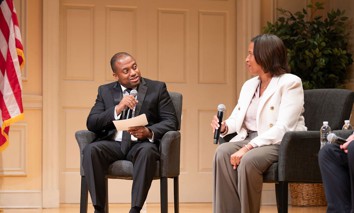
Award-winning civil servants counter negative stereotypes of government employees
The National Academy of Public Administration celebrated public servants as part of the 250th anniversary of the U.S.


Inside the Ford White House years that shaped Alan Greenspan’s idea of public service
Greenspan is remembered for defining an era at the Federal Reserve, but colleagues point to his earlier experience in the Ford administration as the moment he first learned what public service demands inside government, and how economic judgment shifts once it meets political reality.


The federal government has a major blind spot in how it evaluates programs
COMMENTARY | Decades of design flaws have left agencies struggling to measure the impact of their major initiatives. It is time to move beyond compliance and build real, durable capacity.


Can a championship run teach us something about government?
COMMENTARY | We spend a lot of time looking for shortcuts, but the most meaningful progress in federal service — like in sports — requires something more durable than a quick win.


OPM's subtle shifts could redefine federal HR
COMMENTARY | A longtime federal HR chief welcomes the Office of Personnel Management's push to modernize pay and promotions, but warns against the legal tactic the agency is using to make it happen.




Federal reform efforts keep repeating the same pattern. Tennessee offers a different model
COMMENTARY | A federal Pay Agent report and Tennessee’s civil service overhaul highlight a familiar problem: reform depends less on policy design than on management capacity and execution.


Lacking data policy is more than a research problem, it's a government performance problem
COMMENTARY | The ongoing erosion of the federal statistical system, marked by broken time series and a workforce crisis, threatens government capacity to serve the public.


The century-old GS system is 'disintegrating' and government can't agree on how to fix it
COMMENTARY | Though both political parties view the General Schedule as a problem, they have totally different reasons, creating a "compliance culture" that makes reform impossible.
Featured eBooks






Why federal agencies still need to defend hiring standards
COMMENTARY | The Trump administration may be pulling back on disparate-impact enforcement, but agencies still face lawsuits, scrutiny and pressure to prove hiring standards are tied to the job.


A week of recognition, and a career of service
Behind the honors and milestones, federal employees carry a lasting sense of purpose that extends well beyond a single week.


Why the next president must rebuild, not just restore, the administrative state
COMMENTARY | A reconstructed and reimagined administrative state is crucial to restoring effective government.


Federal workforce trauma is creating a stumbling block for AI adoption
COMMENTARY | Following massive workforce reductions — and a $165.6 billion hit to the U.S. economy — federal managers are struggling to integrate AI as low engagement collapses across agencies.


Why the federal government needs to stop obsessing over process
COMMENTARY | Government performance systems often reward documentation, activity and procedural defensibility more than real-world impact. Federal managers must ask three critical questions to eliminate counterproductive rules.




Insights from the inside: How former feds think we ought to reform the federal government
COMMENTARY | A report by seven former senior federal employees shows what DOGE done right would look like.


Critics argue new federal workforce rules increase the risk of politicization, not accountability
COMMENTARY | The debate over the Policy/Career Schedule centers on whether the changes strengthen accountability or erode civil service protections.


The ‘new’ Policy/Career Schedule does NOT (necessarily) politicize the federal workforce
COMMENTARY | The Policy/Career Schedule may not be Trump 1.0's Schedule F, but there are guardrails that can allay some fears about its implications.