aire images/Getty



A call to action: Shining the spotlight on public building utilization
COMMENTARY | The path forward for the government’s real estate portfolio is clear: reduce excess, consolidate intelligently and invest in the core assets that truly support the government’s mission.
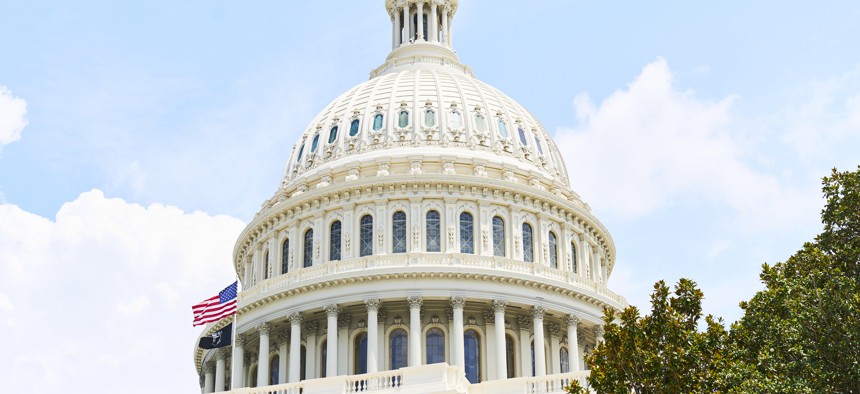
The federal government has no shortage of office space, but on any given day, these buildings sit largely empty. Every American knows real estate is both a valuable and expensive asset, yet the U.S. House of Representatives held a subcommittee hearing in July 2023 titled, “the lights have been on but no one is home” in federal buildings.
This isn’t just a punchline, it’s a crisis.
For too long, the government has been paying for ghost buildings it does not use and cannot afford to keep or continue to neglect. This issue has remained hidden in plain sight, buried under layers of bureaucracy. By releasing the numbers today on the usage of these properties and shining a light on this once illusive issue, we are delivering the transparency American taxpayers deserve.
Currently, the General Services Administration manages close to 8,000 federally owned and leased properties on behalf of approximately 400 agencies and bureaus. Vast portions of federally-owned real estate sit underutilized while delinquent maintenance costs have ballooned to at least $26 billion to as much as $50 billion in backlogged maintenance and repair liabilities.
Congress took an important first step by passing the bipartisan Thomas R. Carper Water Resources Development Act of 2024, which included the USE IT Act, requiring agencies to measure and publicly release information on how their space is actually used.
In short, the objective is to obtain data to inform better decision making about our nation’s real estate holdings and ensure that taxpayers are not footing the bill for underutilized property.
Today, we are releasing the results of the inaugural utilization metrics. This provides the first top-line, government-wide snapshot of space utilization. While this initial data remains imperfect, it is critical to unlock transparency and accountability.
Now that we know where we stand, we can make informed decisions about where we need to be. Based on the data, the federal footprint must shrink. Currently, no agency hits the 60% occupancy benchmark legislated in the USE IT Act. In any well-run organization, whether it be public or private sector, that should be a cause for concern.
In fact, the private sector is similarly sounding the alarm as the 2025 JLL Global Occupancy Planning Benchmark Report revealed the top priority for corporate real estate leaders was portfolio optimization as they look to refine the approach to physical space.
No private-sector company would tolerate futile and wasteful spending. Taxpayers should not be asked to either.
Exposing these inefficiencies empowers us to fix them. We cannot afford to delay. Now that we have this information, it is time we get to work. We can and we must do better. We will look to reduce excess property and realign our nation's real estate portfolio around a stronger, more efficient core.
This is our call to action.
First, we must aggressively dispose of underutilized and high-cost properties, especially those burdened with significant delinquent maintenance backlogs. Keeping them hurts us all. Transitioning these assets to the private sector and local governments can revitalize communities while relieving federal liabilities.
Second, we must fundamentally rethink how the remaining space is used. Co-locating agencies with similar missions just makes good sense. We will reduce duplication, foster collaboration, and maximize the value of every square foot.
Third, we must invest strategically in a smaller, stronger portfolio. Historic, well-located federal buildings that promote civic architecture should anchor this effort, serving as efficient hubs for modern, multi-agency operations.
Now is the moment to act, decisively and without hesitation. Together under President Trump's leadership, the executive branch and Congress have the mandate to transform what was once a fiscal drain of empty space into an engine of economic opportunity.
The American people expect their government to utilize resources wisely. The path forward is clear: reduce excess, consolidate intelligently, and invest in the core assets that truly support our mission.
Edward C. Forst is the administrator for the U.S. General Services Administration.
Rep. Scott Perry, R-Pa., is chairman of the House Subcommittee on Economic Development, Public Buildings, and Emergency Management.